Half the panic of arriving in Venice comes from the fact that you can't see the city from the airport — which is why it pays to lock in a Venice airport transfer before wheels-down. You land. You walk out. And nothing — no canals, no bridges, no gondolas. Just buses, a multi-storey car park, and a long causeway pointing off into the haze. The reveal is delayed by anywhere between 20 and 75 minutes, depending on what you choose. This guide is about choosing well.
I've now made the Marco Polo–to–hotel trip well over thirty times. By bus, by boat, by water taxi, once in a rainstorm that turned the Alilaguna dock into a small swimming pool, and once via a wrong turn that landed me on a regional train to Mestre with someone else's luggage. So here's the 2026 edition of what I've learned — refreshed for current prices, expanded with options most other guides skip (the People Mover, the Mestre rail trick, the acqua alta logistics), and laid out by what I actually think of each route rather than in some artificial ranking order.
In This Article
- Marco Polo vs Treviso — and what to expect at VCE
- Alilaguna water bus — the scenic route
- ACTV bus to Piazzale Roma (with People Mover note)
- When the lagoon plays tricks — acqua alta and MOSE
- Water taxi — the expensive way
- Pre-booked private transfer — the platforms worth comparing
- Regular taxi to Piazzale Roma
- Staying on the mainland? The Mestre rail option
- The comparison you actually want
- What I'd book, depending on who I'm with
First: Which Airport — and What to Expect at VCE
Venice has two airports and they're nothing alike.
Marco Polo (VCE) is the main one — about 8 km from Venice across the lagoon. It handled roughly 11.5 million passengers a year before 2020, has been steadily climbing back, and feels comfortably mid-sized: not the panic of Heathrow, not the village calm of Trieste. Most international and domestic flights land here — Ryanair, easyJet, BA, Lufthansa, ITA Airways, the lot. Schedules, real-time arrivals and the official transport list are on the Marco Polo airport site.
The arrivals hall is on a single level, signage is in Italian and English, free Wi-Fi ("VCE-FreeWiFi") covers most of the terminal once you accept the splash page. The walk from the gate to the exit takes about 8–10 minutes on a normal day; longer if you've landed alongside two long-haul aircraft simultaneously, because passport control is a single bottleneck for non-Schengen arrivals. Plan for that if you're connecting onward.
Treviso (TSF) is the budget airline overflow, 40 km inland. If you're flying Ryanair or Wizz Air, check which airport your ticket says. Treviso to Venice is a separate journey entirely — there's a bus service by ATVO (about €15, 70 minutes) but no boats, obviously, because you're nowhere near the water.
Alilaguna Water Bus — The Scenic Way In
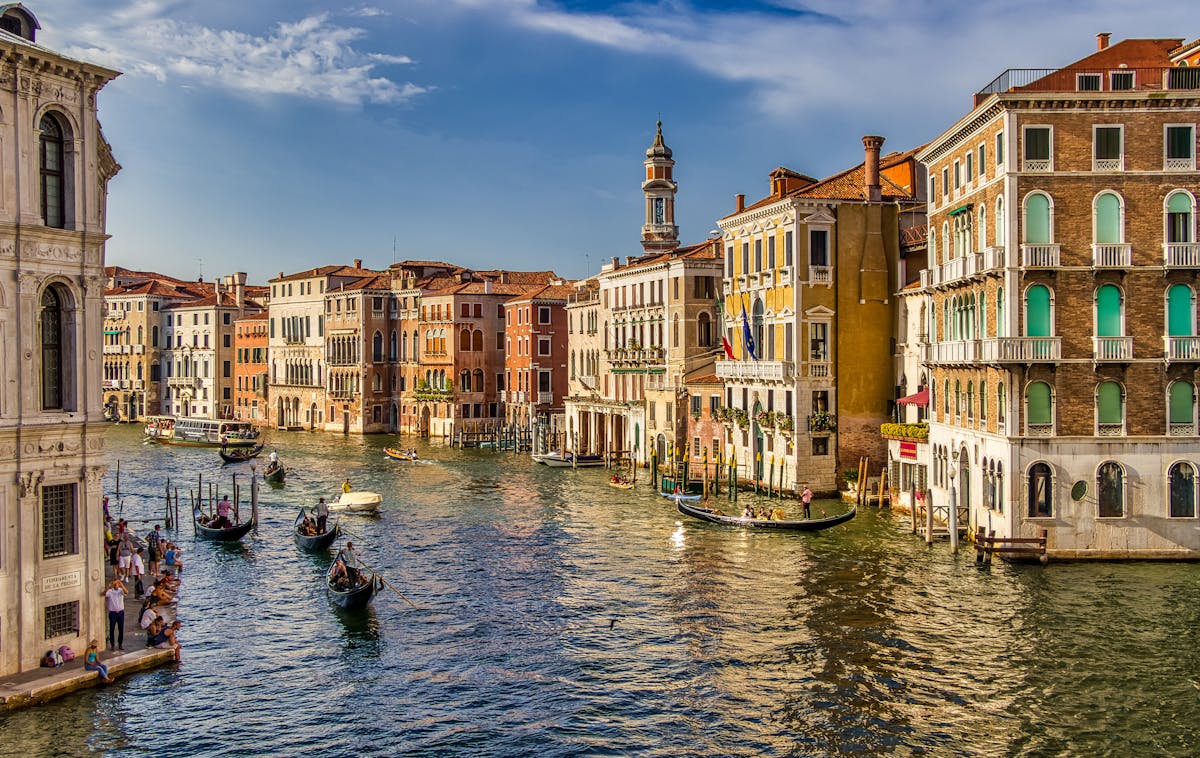
This is the one I tell first-timers to take, at least once. The Alilaguna boats run from a dock about a 5-minute walk from the arrivals hall, across the lagoon, and into Venice itself — dropping passengers at various stops along the way. The walk is signposted and entirely covered, which matters in winter.
There are three lines:
- Blue line (Blu) — the most useful. Stops at Fondamente Nove (for Cannaregio), then crosses to Murano, Lido, and down to San Marco. Takes about 75 minutes to San Marco. Runs roughly every 30 minutes in summer; every hour off-season.
- Orange line (Arancio) — heads to the Grand Canal, stopping at Rialto and then San Marco via a more direct route. Similar timing. Less frequent in winter.
- Red line (Rossa) — goes to Murano, then Lido. Only useful if you're staying on either island.
Cost is €15 one way (€27 return) in 2026. Up-to-date timetables and seasonal service changes are on the Alilaguna website — worth a quick check before you fly, especially November–March when schedules thin out and the last departure can shift earlier.
Not as cheap as the bus, and significantly slower. But here's the thing — the first time you approach Venice from the water, watching the skyline materialise out of the lagoon, the bell towers and domes slowly getting larger, the light catching the facades... it's a genuine moment. I'm not prone to sentimentality about journeys, but that first lagoon crossing changed the way I thought about arriving somewhere.
Practical notes: the boats fill in high season, and luggage space is limited (overhead racks, no proper hold). If you've got more than one large bag, you'll be wrestling with it. The boats also don't run all night — last departure is usually around 00:15. Children under six travel free; ages 6–11 get a small discount, which is the kind of detail that adds up if you're a family.
ACTV Bus No. 5 — Cheap and Straightforward (Plus the People Mover)
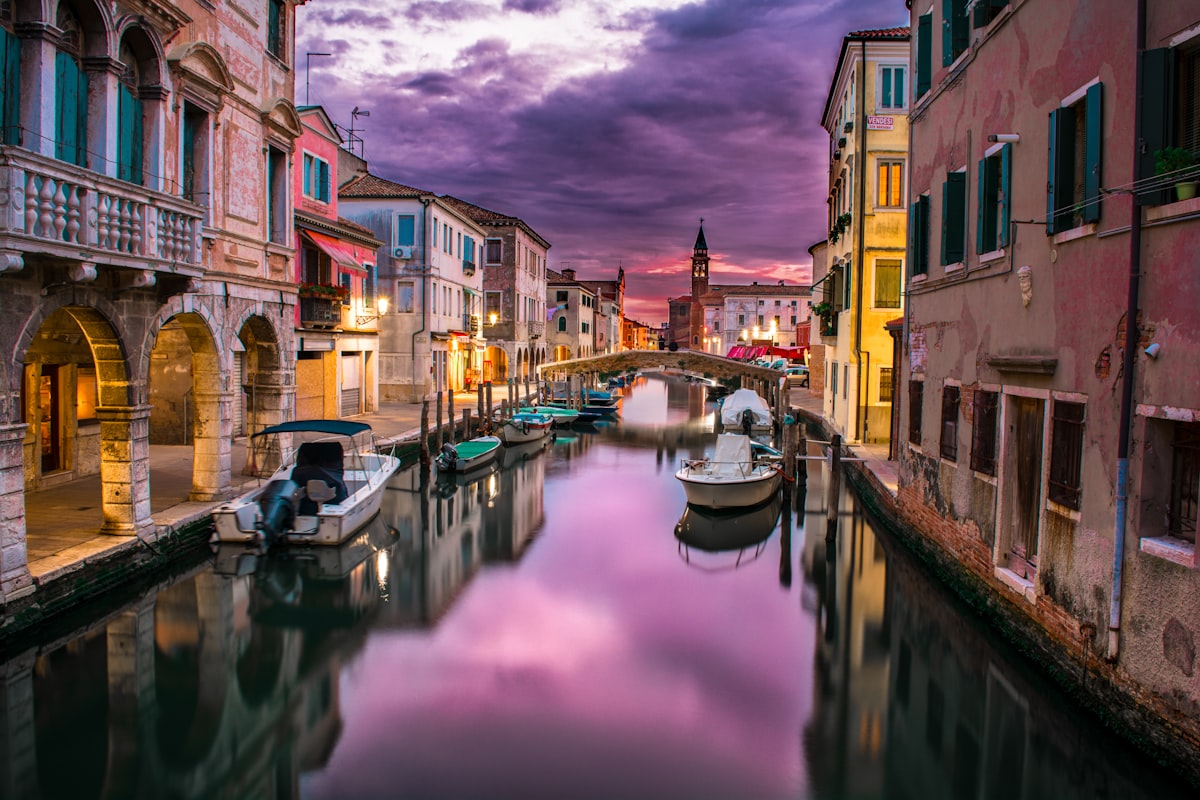
The ACTV bus (route number 5, sometimes branded "Aerobus" on the digital displays) runs from the airport to Piazzale Roma — the bus and car terminal on the western edge of Venice proper. It costs €10 one way (€18 return if you buy the round trip), takes about 20–25 minutes, and runs every 15 minutes during the day, every 30 minutes after 22:00. Live schedules and any service changes are posted on the official ACTV site, and there's a free AVM Venezia Official app (by parent operator AVM) that shows real-time bus and vaporetto positions.
The catch? Piazzale Roma isn't Venice. Not really. It's the point where the road from the mainland meets the city, and it's essentially a concrete bus station with a tram stop. From there you still need to get to your hotel, which means either walking (fine if you're staying in Santa Croce) or taking a vaporetto. And the vaporetto from Piazzale Roma isn't included in your bus ticket.
So the real cost is closer to €10 + €9.50 for a single vaporetto = €19.50 in total. Still cheap. Still works. But it's two legs, two queues, and if you've got a big suitcase, dragging it onto a crowded vaporetto from Piazzale Roma is an experience.
Tickets are sold at the ACTV booth inside the arrivals hall or from the machines outside. You can also buy them on the Venezia Unica website in advance, which I'd recommend — the queue at the booth can get long after a cluster of arrivals. If you're going to use public transport over multiple days, the Venezia Unica "Tourist Travel Card" or the under-30 "Rolling Venice" bundle pays for itself quickly.
A small but useful add-on: the People Mover
One option most guides skip: if your hotel is over by Tronchetto (large island car park, increasingly used for cruise-ship hotels), or you're transferring to/from a cruise at Marittima, there's an automated People Mover that runs between Piazzale Roma and Tronchetto via Marittima. Costs €1.50 for a single ride, takes four minutes, runs every 8 minutes from roughly 07:00 to 23:00. It looks like a small monorail and is genuinely the fastest way across that stretch with luggage. Worth mentioning because everyone I've watched try to walk it has regretted it.
When the Lagoon Plays Tricks — Acqua Alta and MOSE
This is a section I added in 2026 because it kept coming up in messages from readers. Venice floods. Not always, but reliably, in late autumn and winter, when high tides combine with sirocco winds. The locals call it acqua alta, and the practical effect on a fresh arrival is that the walk from Piazzale Roma vaporetto stop to your hotel can involve raised wooden walkways (passerelle) and a sudden need for wellies.
Since October 2020, the MOSE barrier system has been operational, and when it's raised it keeps tides below a certain threshold from entering the lagoon. That's helped — significantly. The catastrophic acqua granda of November 2019 (1.87 m, second-highest on record) won't repeat in the same form. But the system isn't a magic wand; smaller daily high tides still happen, especially in November, December and February.
The official live tide forecast is published by the City of Venice on comune.venezia.it (search for previsioni delle maree) — it gives a 72-hour outlook with predicted water levels in centimetres. Anything over 110 cm and the passerelle go down in St Mark's Square; over 140 and a few low-lying calli get water. If you're arriving in those months, check before you fly. Booking your transfer for a non-flooded entry point can save your shoes.
Water Taxi — Fast, Beautiful, Expensive
A private water taxi from Marco Polo to your hotel. Sounds glamorous. Feels glamorous. Costs like glamour, too.
The fixed rate from the airport is around €120–145 for up to four passengers in 2026, and more if you're going to the further reaches of the city (Lido, Giudecca, the back of Cannaregio). After 22:00 there's a night surcharge. Extra luggage costs extra. Basically, everything costs extra.
That said — you pull up to a private dock behind the airport, step into a mahogany-and-brass motorboat, and cruise straight to your hotel's water door. No queues, no transfers, no dragging bags. If your hotel is on the Grand Canal, you arrive like a minor aristocrat. It takes about 30 minutes to most central destinations.
Is it worth it? Honestly, if you split it four ways, it's about €35 per person — not absurd for the experience plus convenience. For two people or solo, it's a lot. I've done it twice: once when a magazine was paying, once for a wedding anniversary. Both times were memorable.
You can book through the desk inside the arrivals hall, or prearrange through Consorzio Motoscafi, the licensed operators' consortium. Booking ahead means the boat is waiting when you clear customs, which saves about 20 minutes of standing around.
Pre-Booked Private Transfer — The Platforms Worth Comparing
This is the option I didn't know about my first few trips, and now it's what I book most often.
The idea is simple: you book a car from Marco Polo to Piazzale Roma (or sometimes directly to Tronchetto, where some hotels have a water dock), and it's arranged before you land. Fixed price, driver waiting with a sign, no meter. From Piazzale Roma you can walk or take a vaporetto to your hotel — or some services arrange the boat leg too, which they call a "combined transfer."
The pre-booked transfer market for Venice has crowded considerably since 2020, and the platforms aren't interchangeable. After a couple of years of trying different ones I now compare quotes between four or five before I book. The ones that consistently come back with sensible prices and decent driver ratings, in my experience, are:
- Welcome Pickups — polished, slightly pricier, leans into the "first-time visitor" angle with optional add-ons like bottled water and SIM cards. Good if it's your first Italian trip and you want the experience smoothed over.
- GetTransfer — works on an auction model where local companies bid for your route. Cheaper when you filter the carrier ratings; risky if you book the lowest blind. I now only accept quotes from drivers with 4.7+ scores.
- Suntransfers — an old hand on Mediterranean routes, often the cheapest for a plain sedan to Piazzale Roma. The interface dates a bit but pricing is straightforward.
- HolidayTaxis — the UK-based reseller. Easy bundling of transfer + greeter + child seats. Familiar if you're flying from a UK package-holiday context.
- Daytrip — technically a city-to-city service rather than airport-only, but worth a glance if you're heading from Marco Polo straight to Verona, Padova, or somewhere further afield without stopping in Venice. Their per-kilometre rate beats the airport platforms on longer hauls, and they offer optional sightseeing stops along the way.
Cost-wise, for a standard sedan you're typically looking at €45–70 to Piazzale Roma, depending on the platform and time of day. Minivans for larger groups run around €80–100. Compared to a regular taxi, you're paying a small premium for the certainty of someone being there, English-speaking, and a fixed price with no surprises.
Where this really makes sense: late-night arrivals, families with kids and luggage, or when you just don't want to think about logistics after a long flight. I travel solo a lot and I still use this option roughly half the time, because sometimes the simplicity is worth the premium.
A handful of practical things I now check on every booking, regardless of platform:
- Cancellation policy — the better platforms allow free cancellation up to 24 hours out, exactly the window during which long-haul plans tend to wobble. The fine print there varies more than the headline prices.
- Child seats — RTA taxis in Venice essentially never have them. A pre-booked transfer can include one at request, usually €5–10 extra. For families it's the killer feature.
- Meet point — make sure the booking specifies "inside arrivals with name sign" rather than "kerbside pickup". The latter is fine in theory; in practice at Marco Polo the kerbside zones get shuffled by ground control and you can spend 20 minutes failing to find your driver.
- Receipt language — if you're expensing the trip, request the invoice in English with VAT broken out. Italian-only receipts cause expense-reimbursement headaches at most international companies.
The difference between arriving in Venice slightly frazzled and arriving calm is usually about €15. For me, that's worth it every time.
Regular Taxi to Piazzale Roma
A standard taxi from Marco Polo to Piazzale Roma costs a flat €40 in 2026. It's regulated by the local authority, metered on the fixed rate, and takes 15–20 minutes depending on traffic on the Ponte della Libertà (the causeway connecting the mainland to Venice).
Taxis are available right outside arrivals — turn right when you exit the building. The queue is usually manageable, maybe 5–10 minutes. No need to pre-book unless you're a group of more than four (then ask for a tassí maxi).
The thing is, this gets you to Piazzale Roma, and then you're in the same position as if you'd taken the bus: you still need to get to your hotel. If your hotel is near the station or in Santa Croce, great. If it's in San Marco or Castello, you've got another leg to figure out.
Staying on the Mainland? The Mestre Rail Option
This option keeps getting overlooked because it sounds inconvenient, but for a specific subset of travellers — anyone with a hotel in Mestre (where rooms cost roughly half what they do on the island), or those continuing onward by long-distance train to Verona, Padova, Milan or beyond — it's actually the most efficient route.
The setup: take the ACTV bus 15 from Marco Polo to Mestre railway station (around €8, 25 minutes), then board a regional train. Trenitalia regional trains from Venezia Mestre to Venezia Santa Lucia (the island station) run roughly every 10 minutes and cost €1.45, with the journey taking exactly 10 minutes across the causeway. Or, if Mestre is your destination, you're done at the bus.
Timetables and tickets are on the Trenitalia site. For onward journeys to other Italian cities, Mestre is often the more practical departure point than Santa Lucia anyway — more frequent Frecciarossa and Intercity services pass through it.
I've used this route exactly when staying at one of the budget hotels behind Mestre station, and once when catching a Frecciarossa to Milan at 06:30 the morning after a late arrival. It works. The only catch: the bus 15 doesn't run all night, so plan around 23:30 as the last reliable departure.
The Comparison Table
Here's what you actually want — all the options to reach central Venice (San Marco area), including the onward journey from Piazzale Roma where applicable. Prices reflect spring 2026:
| Option | Total Cost | Time | Runs Late? |
|---|---|---|---|
| ACTV bus + vaporetto | €19.50 | 50–60 min | Until ~1am |
| Alilaguna Blu | €15 | 75 min | Until ~00:15 |
| Bus 15 + regional train (Mestre → Santa Lucia) | €9.45 | ~50 min | Until ~23:30 |
| Taxi + vaporetto | €49.50 | 35–45 min | Yes (24h taxi) |
| Pre-booked transfer + vaporetto | €55–80 | 35–45 min | Yes |
| Water taxi (direct) | €120–145 | 30 min | Yes (surcharge) |
Vaporetto single ride is €9.50. A 24-hour pass is €25 and often makes more financial sense if you'll use it again that day. Practical city-pass overviews are on italia.it and the Venezia Unica site linked above.
What I'd Actually Book
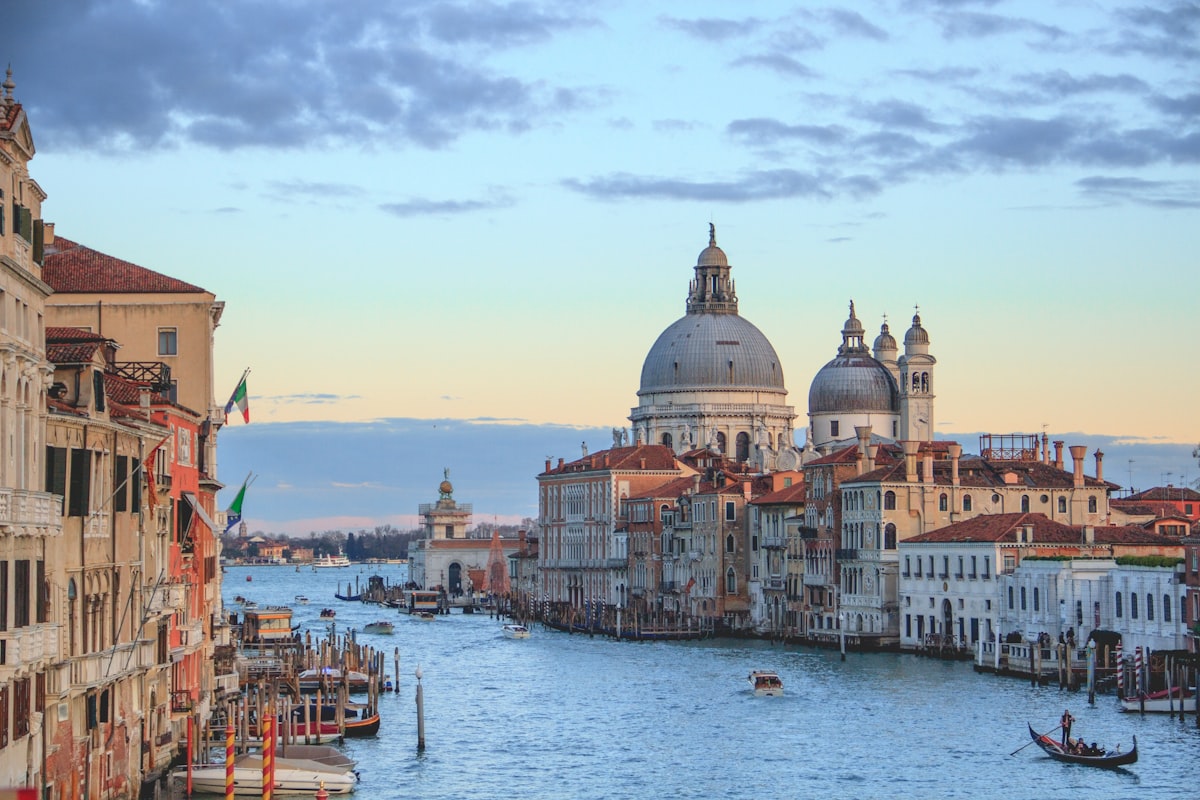
First visit, daytime, no rush: Alilaguna Blu line. The lagoon crossing is an experience you'll remember, and arriving by water sets the right tone for the city.
Return visits, daytime, light packer: ACTV bus 5 to Piazzale Roma, then walk or vaporetto. It's fast, it's cheap, and I know the route in my sleep by now.
Staying in Mestre or catching an onward train: Bus 15 + Trenitalia regional. Cheap, fast, no boat-luggage acrobatics.
Late arrival, tired, bags: Pre-booked private transfer. Compare two or three of the platforms above; the cheapest isn't always the best driver, but the most expensive rarely justifies its premium either. Once you find a service whose ratings hold up in your destination city, it becomes the default.
Special occasion, group of 3-4: Water taxi. Split the cost, arrive in style, take a photo pulling up to your hotel. You'll feel ridiculous and wonderful simultaneously.
Arriving during acqua alta (November–February high tides): Skip the Alilaguna for that day if levels are forecast above 110 cm — bus 5 to Piazzale Roma is your reliable fallback. Check the City of Venice tide forecast the morning of your flight.
What I'd skip: The shared shuttle vans that some agencies offer — they're cheap but you end up waiting for the van to fill, and you make stops at multiple hotels. What should be a 30-minute journey becomes 90 minutes of suburban Venice driving. Life's too short.
Whatever you choose, you'll get there. Venice has been receiving visitors for about a thousand years. The logistics are figured out. The only thing that isn't figured out is what you'll do once you arrive — and I've got a few suggestions for that too.