Every travel site will tell you the "best time to visit Venice" is April to June or September to November. They're not wrong, exactly. But that advice is so broad it's almost useless, like saying the best time to eat is "when you're hungry." The difference between early April and late June in Venice is the difference between wearing a coat in a half-empty piazza and sweating through a crowd so dense you can't see the pavement.
I've been visiting Venice since 2007. I've photographed it in every month of the year, sometimes twice. I have strong opinions about all of them.
In This Article
- January & February — Cold, quiet, and Carnival
- March & April — Spring arrives (slowly)
- May & June — The sweet spot everyone knows about
- July & August — Why do people do this to themselves?
- September & October — My favourite months
- November & December — Moody, flooded, magnificent
- So when should you actually go?
January & February: The Cold and the Carnival
January is Venice at its most stripped-back. Temperatures hover between 0°C and 7°C. The fog rolls in off the lagoon and sits there for days, sometimes so thick that San Giorgio Maggiore vanishes entirely from the waterfront. The crowds are minimal. Hotels drop their prices to as low as they'll go all year.
I love January in Venice. The cold is real — your fingers go numb holding a camera within twenty minutes — but the atmosphere is unlike any other month. The city feels like it belongs to the people who live there again. You can walk through San Marco at 10am and hear your own footsteps.
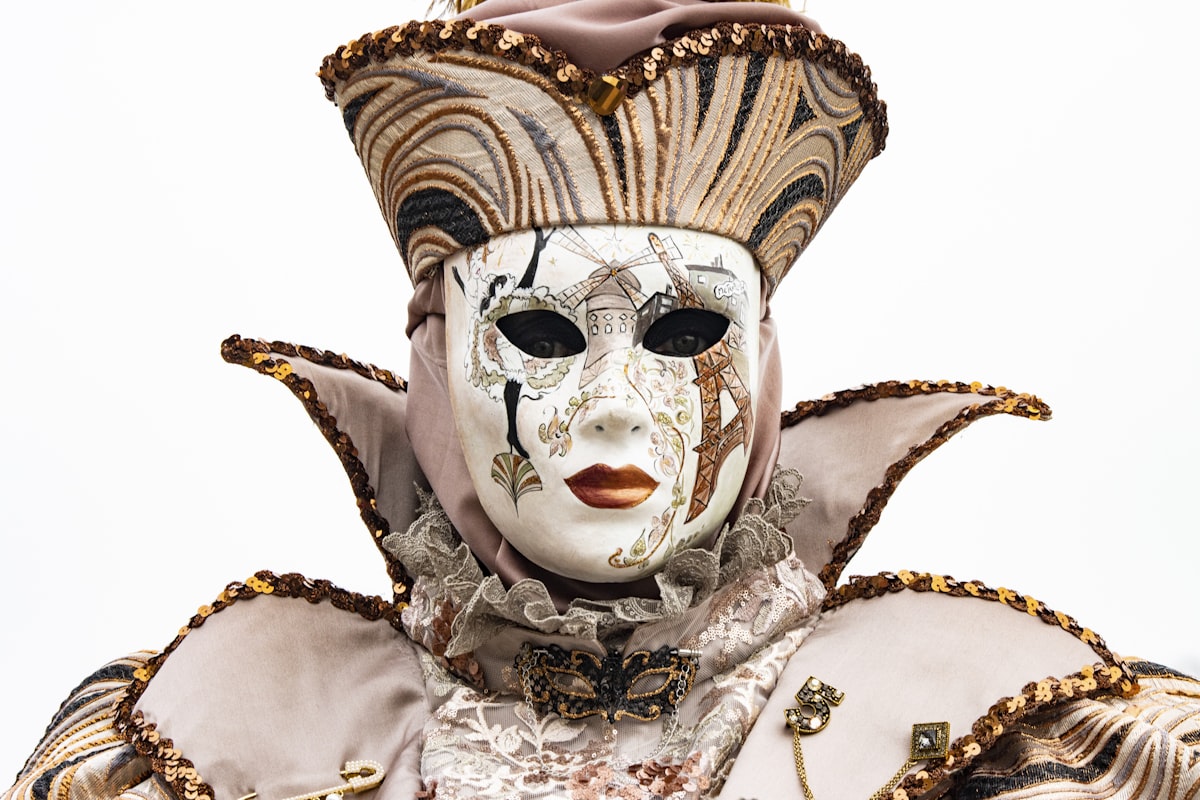
February is a different story entirely, because of Carnival. The Venice Carnival runs for about two weeks, usually ending on Shrove Tuesday. During this period, San Marco fills with costumed figures, tourists flood in, hotel prices spike, and the city transforms into something between a Renaissance pageant and a theme park.
If you come for Carnival, book months ahead and expect to pay summer prices in winter weather. If you come in February but outside Carnival dates, you get January prices with slightly longer days. Check the exact dates before booking — they shift every year.
March & April: Spring Arrives, Eventually
March is transitional. Early March still feels like winter — grey skies, occasional acqua alta, temperatures around 8–12°C. By late March, something shifts. The light gets warmer. Wisteria starts appearing on walls in Dorsoduro. Café owners begin putting tables outside, optimistically.
April is when Venice starts to feel properly alive again. Temperatures climb to 13–17°C, rain is possible but less persistent, and the city greens up along the canal edges and in the smaller campi. Easter brings a surge of visitors — sometimes a major one — but outside the Easter week, April is manageable.
I photographed a series in late March once, and the quality of the light was extraordinary — low, golden, cutting through the narrow calli at angles you don't get in summer. The downside was that I got rained on four days out of seven and had to dry my equipment in a bathroom with a hairdryer.
Occasional flooding still happens in March. April is generally dry enough to relax about it.
May & June: Everyone's Favourite (For Good Reason)
This is the stretch that gets recommended by every guidebook, every travel blog, every person who's been to Venice once and had a good time. And they're right — the weather is genuinely lovely. May averages 17–22°C, June pushes to 22–27°C. Rain is infrequent. The days are long. Everything is open.
The problem is that everyone else has read the same advice.
By mid-May, the cruise ships are arriving daily (though Venice has restricted the largest ones from the Giudecca Canal since 2021, the medium-sized ones still come). Day-trippers from the mainland pack San Marco from about 10am to 4pm. The queue for the Basilica can stretch across the piazza. Restaurant prices in tourist areas creep up.
May in Venice is beautiful the way a popular beach is beautiful — you're sharing the view with a lot of other people who had the same idea. That doesn't ruin it. But it changes the character.
June is warmer, slightly less crowded than peak May (schools haven't broken up yet in most European countries), and the evenings are magnificent — the sun doesn't set until after 9pm and the passeggiata along the Zattere is one of the great European evening walks. Late June starts getting hot, though. Above 30°C and humid, and you'll feel it.
July & August: Why?
I'll be blunt. July and August are my least favourite months to be in Venice.
The heat is oppressive — 30–35°C with humidity that makes it feel worse. The canals smell. This isn't a myth or a cliché; in a city with no cars and no wind, warm stagnant water in narrow channels produces a specific aroma in high summer that is hard to romanticise. Not everywhere, not all the time, but enough that you notice it.
The crowds peak in August. Every narrow street near a landmark becomes a slow shuffle. Vaporetti are packed. Restaurant staff look exhausted. The city creaks under the weight of its own popularity.
That said — and I wouldn't be honest if I didn't mention this — Venice on a summer evening can be extraordinary. After the day-trippers leave (most are gone by 6pm), the city exhales. The temperature drops to something tolerable. The light turns pink and gold. Sitting on the Fondamenta della Misericordia with a spritz at 8pm in August, watching the sky change colour over Murano in the distance — that's still Venice being Venice. You just have to survive the daytime to get there.
| Month | Avg. High | Avg. Low | Rain (mm) | Crowds |
|---|---|---|---|---|
| January | 6°C | 0°C | 55 | Very low |
| February | 8°C | 1°C | 55 | Low (except Carnival) |
| March | 12°C | 4°C | 60 | Low–moderate |
| April | 16°C | 8°C | 65 | Moderate (Easter spike) |
| May | 21°C | 13°C | 70 | High |
| June | 25°C | 17°C | 75 | High |
| July | 28°C | 20°C | 65 | Very high |
| August | 28°C | 20°C | 80 | Very high |
| September | 24°C | 16°C | 70 | Moderate–high |
| October | 18°C | 11°C | 75 | Moderate |
| November | 12°C | 5°C | 85 | Low |
| December | 7°C | 1°C | 55 | Low |
September & October: My Favourite Months
If I could only visit Venice in one month, it would be late September.
The summer crowds have thinned but haven't vanished. Temperatures settle to a comfortable 20–25°C. The light — and I say this as someone who photographs light for a living — is the best of the year. Lower in the sky than summer, warmer in tone, casting long shadows down the calli by mid-afternoon. The water in the canals picks up colours it doesn't have in July.
September does have one complication: the Venice Film Festival runs in the first two weeks, concentrated on the Lido. If you're staying on the Lido, this matters a lot (higher prices, booked-out hotels). If you're staying in Venice proper, you might not even notice it, except for the occasional film poster on a vaporetto stop.
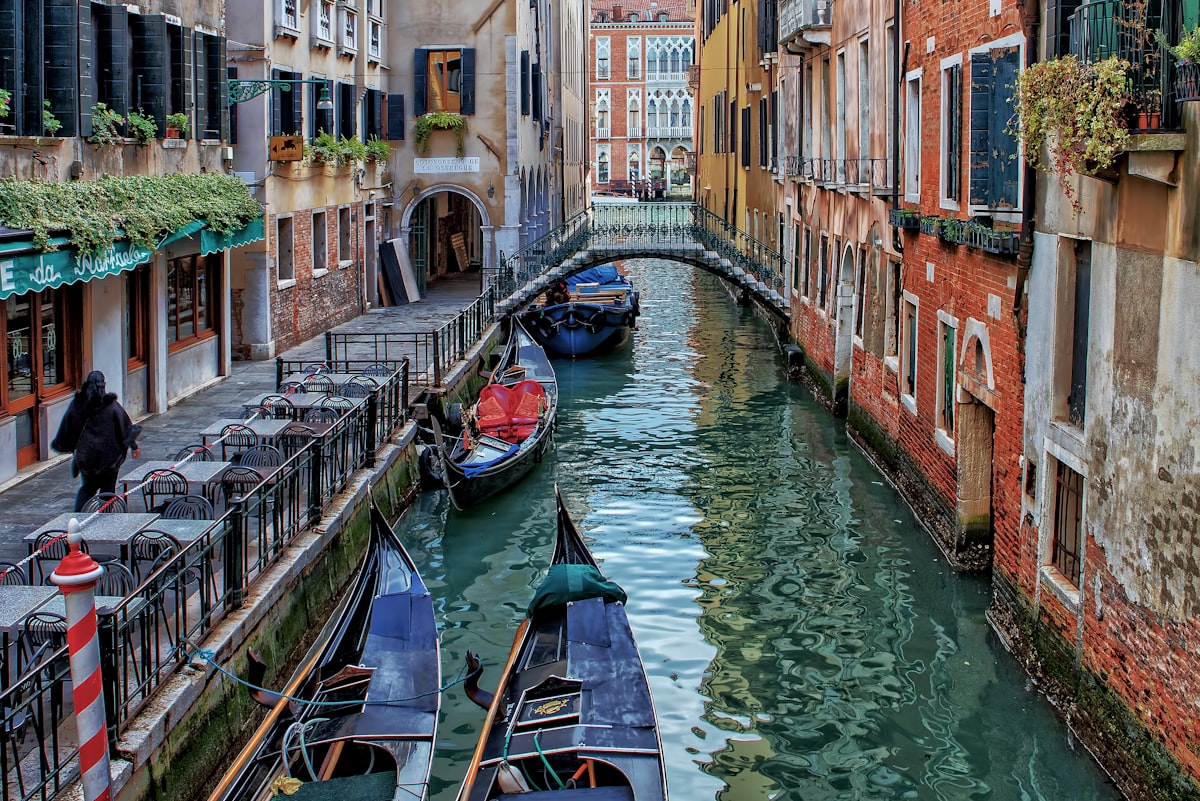
October is September's slightly moodier sibling. Still warm enough for a light jacket (15–20°C in the first half), but the days get shorter and the first acqua alta events of the season may appear. I find October romantic in a way that June isn't — there's a hint of melancholy to the shortening days, the occasional mist on the water in the morning, the first chill at night.
Hotel prices in October are reasonable — not January-cheap, but well below the May–September peak. Restaurants are less frantic. The islands (Murano, Burano) feel almost deserted on weekdays.
November & December: Moody, Flooded, Magnificent
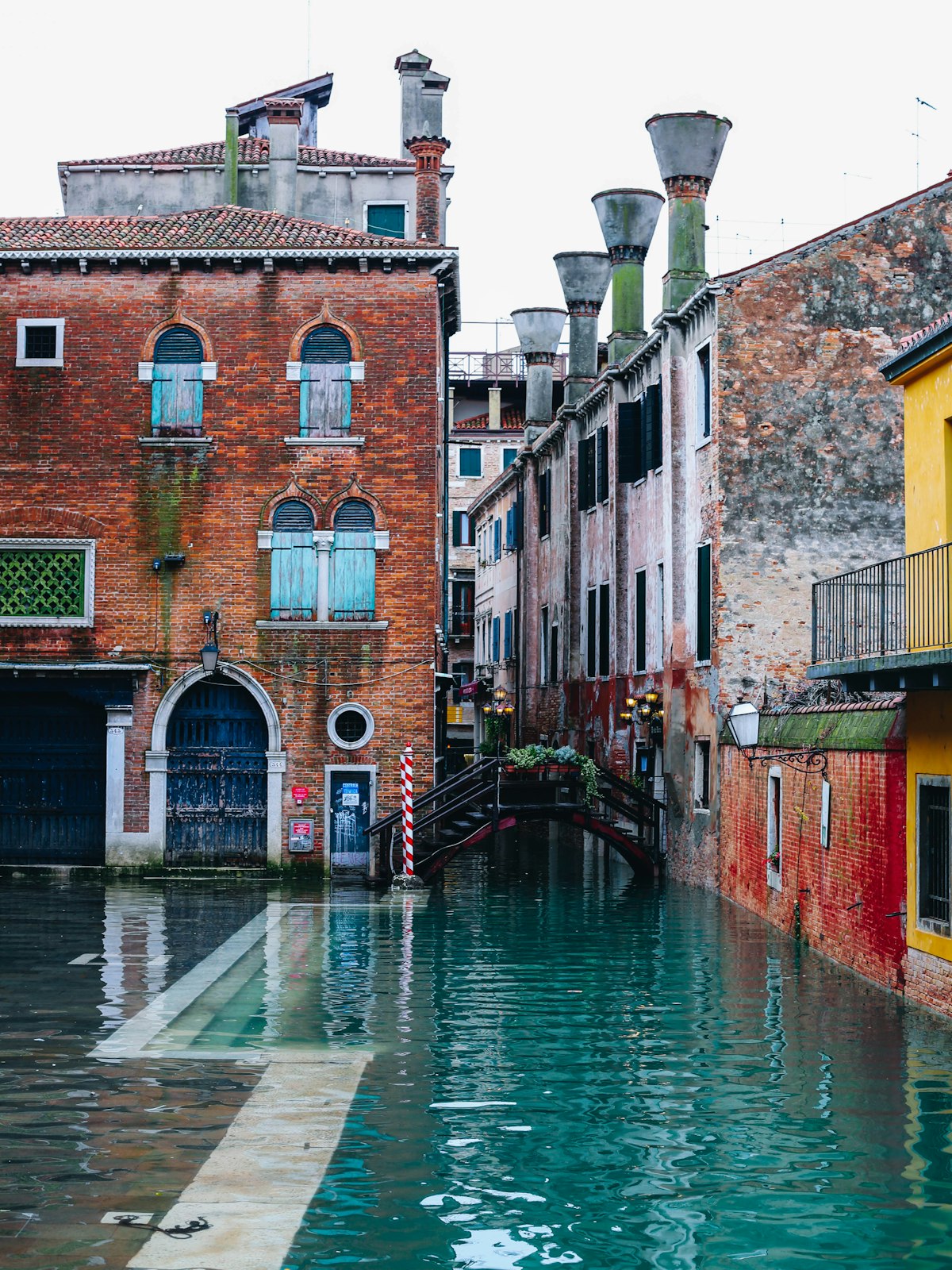
November is when acqua alta (high water) hits its peak. The MOSE flood barrier system, operational since 2020, has reduced the severity — Venice no longer gets the devastating 1.5m+ floods of the past — but tides above 80cm still flood the lowest points of the city, particularly Piazza San Marco. The elevated walkways (passerelle) come out, people wade through water in rubber boots, and the city takes on a quality that I can only describe as intensely, stubbornly alive.
Not everyone wants that experience. Fair enough.
But November Venice, on the days when the water recedes and the sun appears between storms, is staggeringly beautiful. The city empties of tourists. The colours deepen. The cold air makes everything sharper. I shot some of my best work in Venice in November 2019 — four days, maybe six other photographers I encountered total, and the kind of empty, rain-washed streets that make you feel like the city is posing for you alone.
December brings short days (sunset around 4:30pm), temperatures near freezing, and Christmas markets in Campo Santo Stefano. The holiday period (roughly December 20 to January 6) sees a brief uptick in visitors, but nothing like summer. New Year's Eve in Piazza San Marco can be spectacular — fireworks over the Bacino — or miserable, depending on the weather and your tolerance for standing in the cold with thousands of strangers.
So When Should You Actually Go?
It depends on what you want. But since you're reading this for an opinion rather than a weather table, here's mine:
- Best overall: Late September (third or fourth week). Warm, beautiful, not too crowded.
- Best for atmosphere: Early November. Cold, occasionally wet, genuinely unforgettable.
- Best for budget: January (outside New Year's week). Cheapest hotels, emptiest streets.
- Best for first-timers who want safe weather: Late May or early June.
- Avoid if possible: Late July through mid-August. The heat, the crowds, the canal smell. Venice deserves better from you, and you deserve better from it.
Whatever month you choose, Venice will be Venice. Even on its worst day — and I've been there on some genuinely bad days, standing in rising water in a November downpour with a broken umbrella — it remains one of those places that rearranges something in your head. The timing changes the flavour, not the substance.
Though I'd still avoid August.