Every guidebook tells you to visit Murano and Burano. This is one of the rare cases where the guidebooks are right.
I say this as someone who is instinctively suspicious of any recommendation that appears in every travel guide simultaneously. But after more than thirty trips to Venice, the lagoon islands remain one of the things I consistently tell people to do. Murano for the glass, Burano for the colour, and the boat ride itself for the way it reminds you that Venice isn't just a city — it's an archipelago scattered across a shallow lagoon, and most visitors never leave the main cluster of islands.
Here's how to do it properly, in one day, without the usual problems.
In This Article
How to Get to the Islands
Both Murano and Burano are reached by vaporetto — the water buses that function as Venice's public transport. You don't need a tour. You don't need a private boat. You just need a valid transport pass and a basic understanding of the route numbers.
From central Venice, head to Fondamente Nove (sometimes written Fondamenta Nuove on older maps). It's on the northern edge of Venice, in Cannaregio. From there:
- Line 12 goes to both Murano and Burano (and Torcello). This is the main island-hopping route.
- Lines 4.1 and 4.2 go to Murano only, with more frequent service.
Journey times: Fondamente Nove to Murano is about 12 minutes. Murano to Burano is about 30 minutes. Burano to Torcello is 5 minutes.
| Ticket Option | Price | Best For |
|---|---|---|
| Single ride | €9.50 | Nobody (you'll need multiple rides) |
| 24-hour pass | €25 | Day trip to islands + getting around Venice |
| 48-hour pass | €35 | Multi-day exploring |
| 72-hour pass | €45 | A full long weekend |
Buy a 24-hour pass from the Venezia Unica website or from the ACTV booths at major stops. The pass activates when you first validate it, so you can buy it the day before and activate it the morning of your island trip. Since you'll take at least four vaporetto rides on this day trip, the 24-hour pass pays for itself immediately.
Murano: Where Not Everything That Glitters Is Genuine
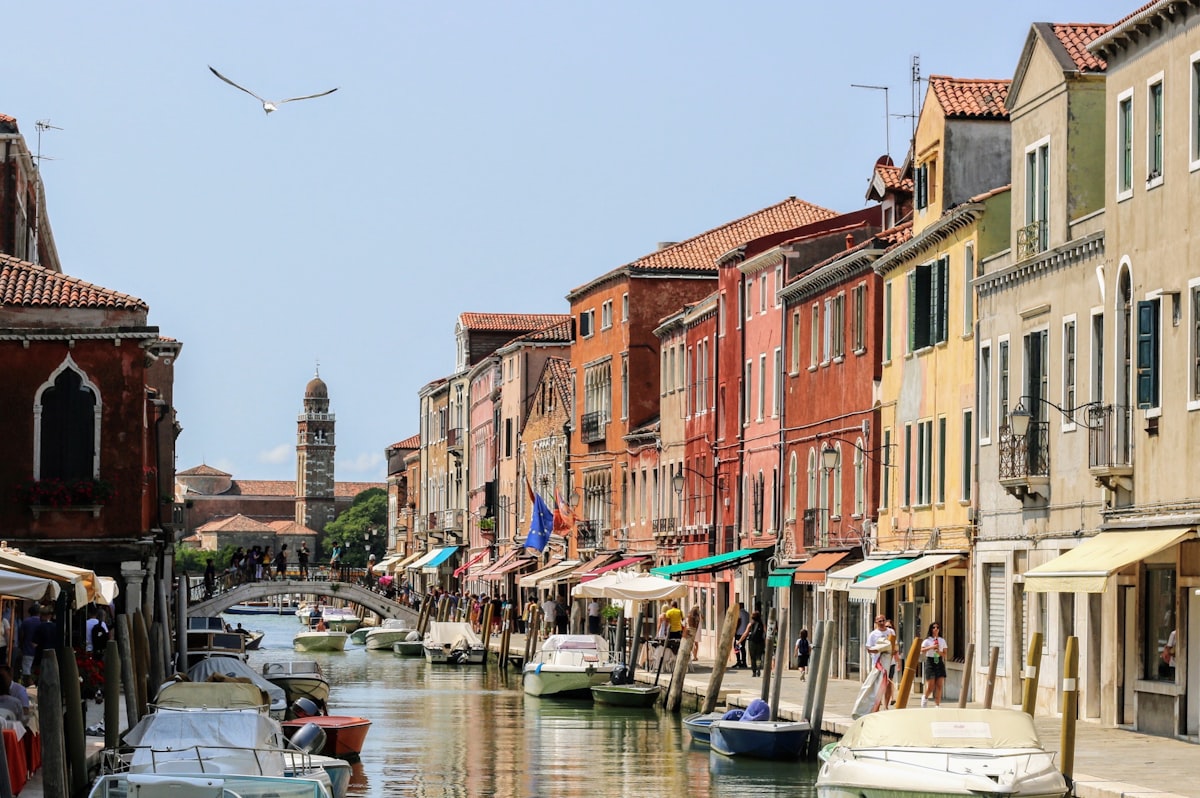
Murano has been making glass since 1291, when the Venetian Republic forced all glassmakers to move there from the main islands. The official reason was fire risk. The actual reason was probably to keep trade secrets contained — glassmakers who tried to leave were, according to some accounts, pursued by state assassins. The Venetians were serious about their intellectual property.
Today, Murano is still a working glass-production centre, but it's also thoroughly touristed. Here's how to navigate it:
The free demonstrations. The moment you step off the vaporetto, someone will approach you offering a "free glass demonstration." This is a sales funnel. You'll be walked to a factory showroom, watch a glassblower make something in about three minutes, and then be released into a shop where everything costs €50–500. The demonstration itself is genuine — the glassblowing is real and impressive — but the pressure to buy can be uncomfortable, and the prices in these tourist-facing showrooms are substantially higher than elsewhere on the island.
My recommendation: do one free demonstration for the spectacle, because watching someone shape molten glass is extraordinary. Then leave the showroom without buying anything, and explore the island on your own.
Where to actually buy. Walk past the tourist strip near the Colonna and Faro vaporetto stops. Head toward the Museo del Vetro (Glass Museum) and beyond, into the quieter part of the island. The smaller workshops along the Rio dei Vetrai and the streets behind the main drag sell genuine Murano glass at reasonable prices. Look for the Vetro Artistico Murano trademark — a sticker certification that verifies the piece was actually made on Murano, not imported from China and sold with a "Made in Murano" story.
Plan about 2–2.5 hours on Murano. That gives you time for a demonstration, the museum, a wander, and a coffee.
Burano: A Photographer's Problem
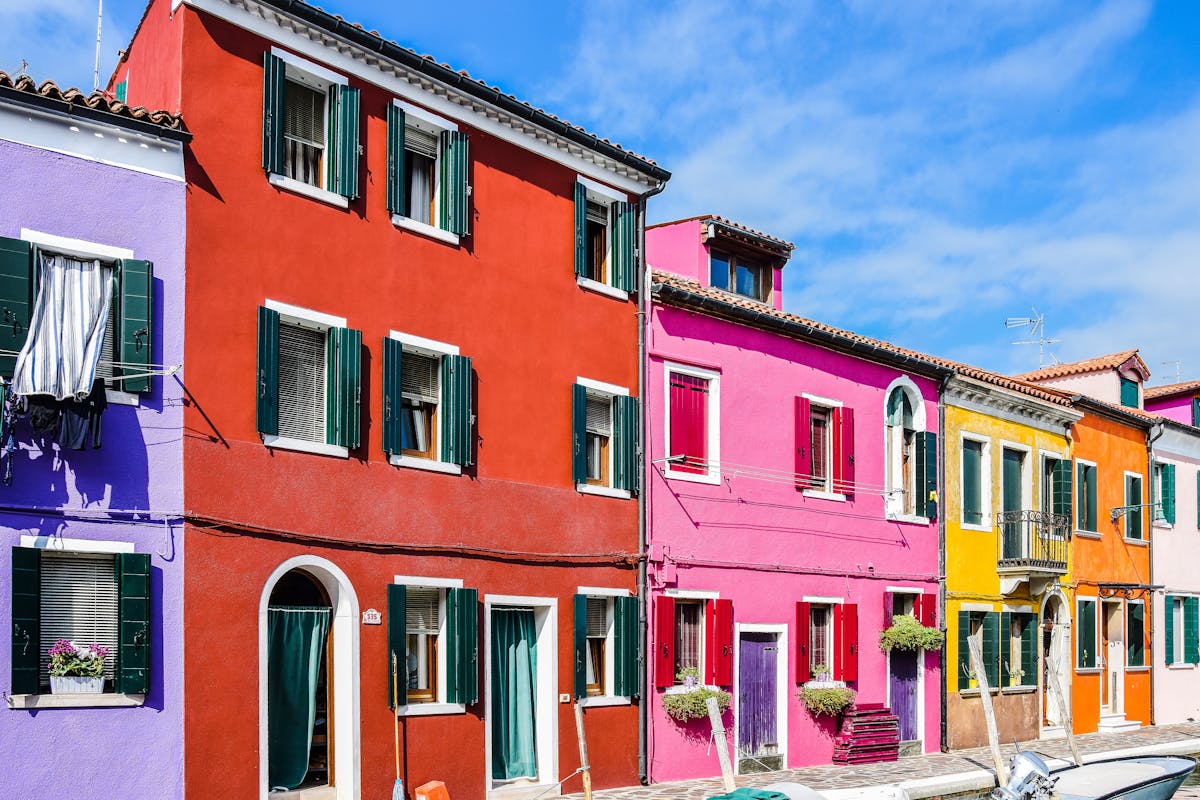
I call it a photographer's problem because Burano is so relentlessly photogenic that it's actually difficult to take a bad picture there. Every angle works. Every colour combination sings. You point a camera at literally any building and the result looks like a postcard. After twenty minutes I stopped trying to compose careful shots and just started shooting everything, which is not how I normally work and felt vaguely unprofessional.
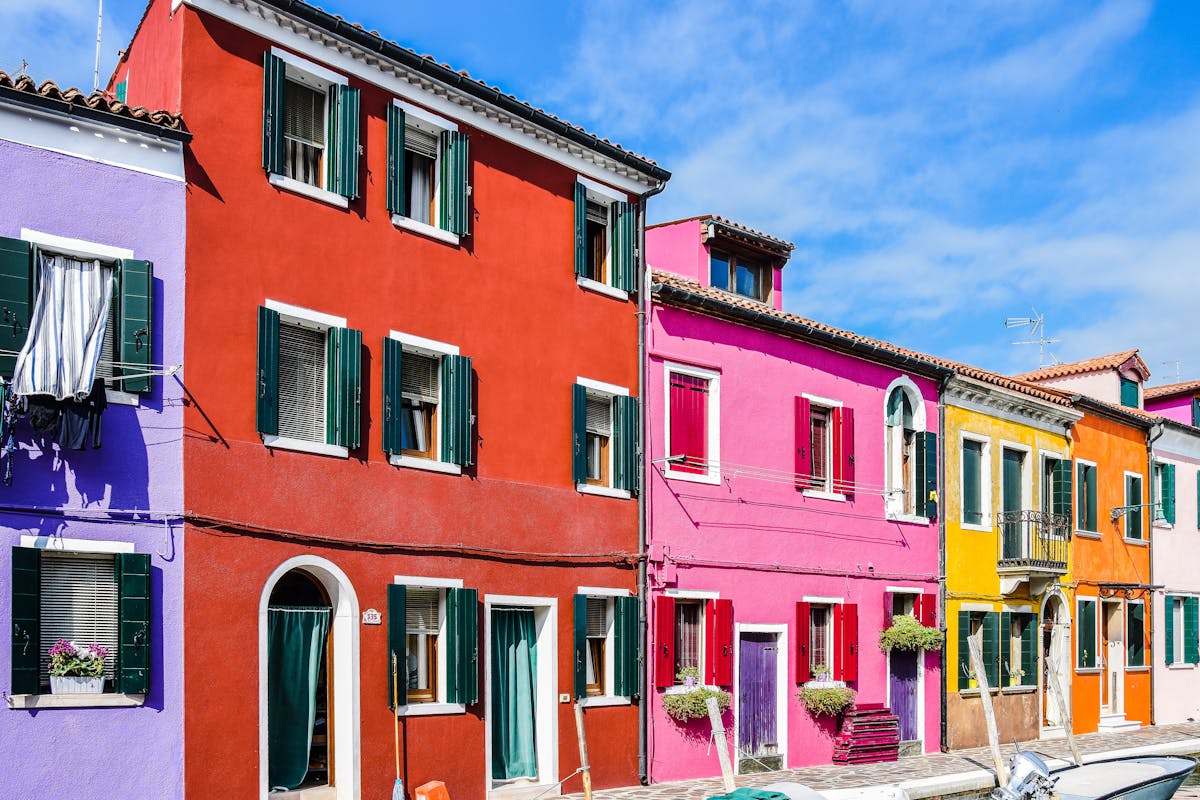
The coloured houses are Burano's defining feature. Nobody is entirely certain why they're painted this way — the common explanation is that fishermen needed to identify their houses from the lagoon in fog, which is plausible but possibly apocryphal. What's definitely true is that residents must get approval from the local government before repainting, and there's a specific palette of approved colours for each address. The system works. The island looks like it was designed by someone who understood colour theory, which it essentially was, over several centuries.
Lace. Burano's other tradition is lace-making, which dates back to the 16th century. Real Burano lace is painstakingly handmade and costs accordingly — a small tablecloth might run €200–500. Most of what you'll see in the tourist shops is machine-made and imported. If you want to see genuine lace, the Museo del Merletto (Lace Museum) on the main square has beautiful examples and occasional demonstrations. It's small but well done.
Where to eat. Burano has better restaurants than you'd expect for a tourist island. Avoid the places right at the vaporetto stop and walk a few minutes into the island. A few names I've eaten at more than once:
- Trattoria al Gatto Nero — probably the most famous restaurant on the island. Seafood risotto that I still think about. Reservations essential, especially weekends. Not cheap, but not extortionate either (€35–50 per person for a full meal).
- Riva Rosa — slightly more casual, good frittura mista (mixed fried seafood), nice canal-side tables.
- Any place where you can see locals eating. Burano still has a resident fishing community — follow where they go.
“Burano at 9am belongs to the residents, hanging laundry and chatting across canals. Burano at noon belongs to the tour groups. Burano at 3pm, after the groups leave, belongs to the light. Choose your Burano.”
Photography timing. Morning light hits the eastern facades. Afternoon light hits the western ones. The most photographed street (Via Galuppi and the streets around the main canal) faces roughly north-south, so midday gives the most even light but the least drama. I prefer late afternoon — around 3:30–4:30pm in shoulder season — when the low sun hits the western-facing houses and the colours become almost impossibly saturated.
Plan 2.5–3 hours on Burano, including lunch.
Torcello: The Quiet One
Torcello is a five-minute vaporetto ride from Burano, and most people skip it. This is understandable — it's essentially an empty island with a church, a museum, and about fourteen permanent residents. But if you have an extra hour and any interest in history, it's worth the detour.
This was the original settlement in the Venetian lagoon. Before Venice existed, Torcello was a busy settlement of 20,000 people. Disease, silting, and the rise of Venice itself gradually emptied it over centuries. Now it's a flat, marshy island with a path, some ruins, and the Cathedral of Santa Maria Assunta — which contains a 12th-century Byzantine mosaic of the Last Judgement that is, genuinely, one of the most powerful things I've seen in any church anywhere.
The mosaic covers the entire western wall. Devils, sinners, angels, Christ — all rendered in gold and deep blue with the kind of intensity that medieval artists specialised in and that modern artists mostly don't attempt. It's not beautiful in the way the Basilica mosaics are beautiful. It's frightening, and strange, and very old, and standing alone in that near-empty church looking at it is an experience that has nothing to do with tourism.
If you go, allow 45 minutes to an hour. The walk from the vaporetto to the cathedral takes about 10 minutes along a canal path.
A Realistic Day Itinerary
| Time | What | Where |
|---|---|---|
| 8:00–8:15 | Vaporetto from Fondamente Nove | Line 12 or 4.1/4.2 |
| 8:30–10:30 | Glass demonstration, Glass Museum, wander | Murano |
| 10:45–11:15 | Vaporetto Line 12 Murano→Burano | In transit (enjoy the lagoon views) |
| 11:15–12:30 | Walk, photograph, explore the streets | Burano |
| 12:30–13:30 | Lunch (book ahead if Gatto Nero) | Burano |
| 13:30–14:30 | More exploring, Lace Museum, afternoon light | Burano |
| 14:30–15:30 | Optional: Torcello side trip | Torcello |
| 15:30–16:15 | Vaporetto back to Venice | Line 12 to Fondamente Nove |
This is a comfortable pace, not a forced march. Adjust based on what interests you. If glass doesn't excite you, spend less time on Murano. If you want to photograph Burano in afternoon light, skip Torcello and stay longer. The vaporetti run frequently enough that you're not locked into rigid timings.
Things I Learned the Hard Way
Don't take a guided tour. I feel strongly about this. The islands are small, well-signed, and easy to navigate. A guided tour adds nothing except a schedule you don't control and a stop at a particular glass factory where the guide earns commission. The vaporetto is public transport. You can do this yourself.
Validate your transport pass. Every time you board a vaporetto, tap your pass on the reader. Inspectors do check, and the fine is €60. I've seen it happen on the Burano route specifically, probably because tourists assume island services are somehow informal. They are not.
Murano has multiple vaporetto stops. The main ones are Colonna and Faro. Get off at Colonna (the first stop) and walk the length of the island to Faro, where you catch the Line 12 onward to Burano. This way you see everything without backtracking.
Bring a decent camera. I don't often say this — phones are fine for most things in Venice — but Burano's colours are the kind of subject that benefits from a proper lens. The dynamic range between deep shadow and saturated colour in those narrow streets is more than most phone sensors handle well. That said, I've seen beautiful Burano shots taken on phones by people who understand light better than they understand cameras, so perhaps the tool matters less than the eye.
The lagoon islands are a different Venice. Quieter, slower, and — in the case of Burano — far more colourful. They remind you that this city was never just one island. It was, and still is, a constellation.